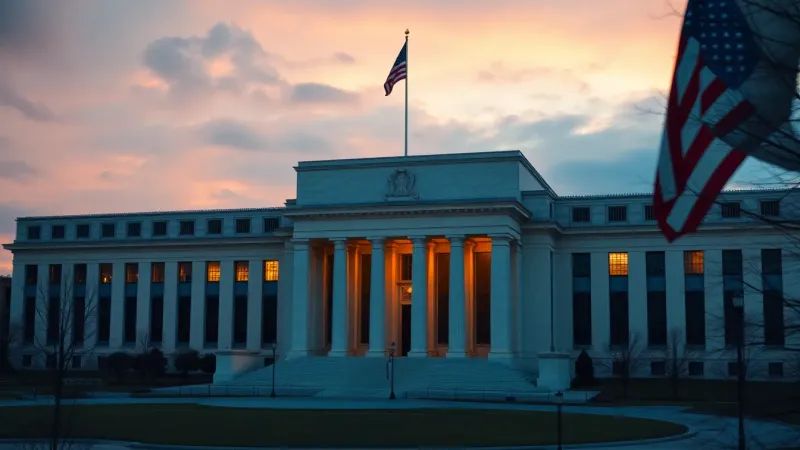
The Fed maintains rates and pushes back hopes of a rate cut in 2026
The Federal Reserve refuses to budge on rates. Traders definitively bury the hypothesis of a rate cut before 2027. A strong signal that reshapes market expectations.
Macroeconomics is the main engine driving all financial markets: forex, equities, bonds, commodities and crypto. Understanding central bank decisions (Fed in the US, ECB in Europe, BoJ in Japan, BoE in the UK) and major data releases (CPI inflation, NFP jobs, GDP, PMI) is essential to anticipate trends and size exposure correctly.
Since 2022, the global monetary cycle has been dominated by fighting post-Covid and post-Ukraine war inflation: rapid hikes in 2022-2023 (Fed at 5.5%, ECB at 4%), then an easing cycle starting 2024-2025 as disinflation consolidated. 2026 shapes up as a pivotal year for central bank responses to economic slowdown and a new wave of US tariffs.
ActuTrading Economy covers monetary policy decisions (FOMC, ECB Governing Council), US and European macro releases (NFP, CPI, PCE, Ifo, PMI, ZEW), sovereign debt issues, and geopolitical impact on global trade balances.
CPI, INSEE, purchasing power, ECB impact: French inflation decoded.
Read →FOMC, dot plot, Fed funds rate, Powell guidance and market effects.
Read →Deposit rate, Lagarde, 2% inflation target, sovereign stress.
Read →25 years of dovish policy, NIRP exit, Kazuo Ueda and the yen.
Read →9-member MPC, Andrew Bailey, vote transparency, sterling pound.
Read →Frankenshock January 15, 2015, CHF safe-haven, Martin Schlegel.
Read →Michele Bullock, AUD commodity currency, China dependence.
Read →
The Federal Reserve refuses to budge on rates. Traders definitively bury the hypothesis of a rate cut before 2027. A strong signal that reshapes market expectations.

A new study reveals that AI is now threatening skilled and cognitive tasks. Five million French people could see their jobs jeopardized over the next two to five years.

As a fragile ceasefire between Iran and the United States enters its 4th day, world stock markets move cautiously forward. The Strait of Hormuz remains largely blocked, threatening global energy supplies.

The US Federal Reserve is expected to leave rates unchanged at its March meeting. Weak employment signals and soaring energy prices are weighing on the decision.

An agreement between Iran and the United States boosts the French economy. OFCE forecasts growth of 0.8% in 2026 if energy prices return to normal.

The French government refuses to make a decision on fuel prices. The unions were calling for emergency measures, but only vague promises.

Extreme tension in the Middle East: Teheran targets desalination plants vital to Gulf economies. A major structural risk for the region.

Oil flirts with $110 a barrel amid Trump's trade threats and tensions in the Strait of Hormuz - gold rallies, inflation threatens to return to haunt central banks.

Despite gasoline flirting with $4 a gallon, Wall Street is betting on Fed rate cuts rather than hikes - a shift in rhetoric that benefits all risk assets.

Energy facilities in the Middle East are damaged and repairs will take a long time. Meanwhile, Opep+ is increasing its quotas. What does this mean for your wallet?

Banking giant Citigroup has taken a one-off charge of $124 million at its Irish hub in response to global economic uncertainties. This decision reflects the growing tensions on the markets.

After five years of persistent inflation, households are facing a substantial increase in their daily expenses. An analysis of the real impact beyond the official figures.