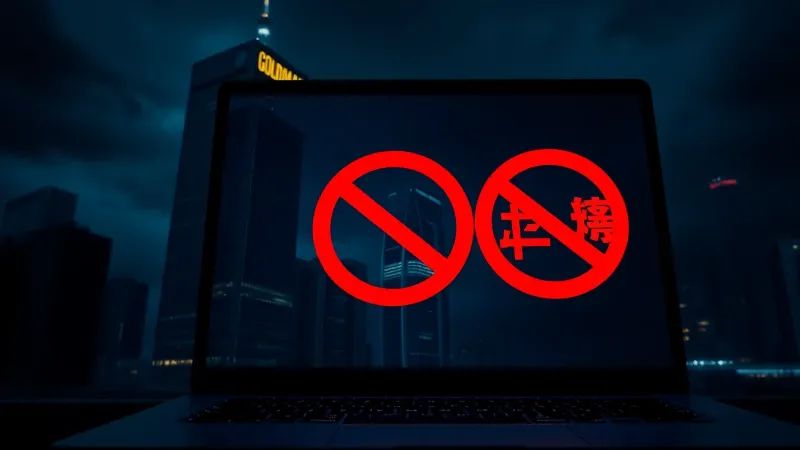
Goldman Sachs Bans Anthropic's AI from Its Hong Kong Bankers
The American bank has just banned its Hong Kong-based teams from using Claude, Anthropic's AI assistant. A decision that speaks volumes about regulatory tensions.
Macroeconomics is the main engine driving all financial markets: forex, equities, bonds, commodities and crypto. Understanding central bank decisions (Fed in the US, ECB in Europe, BoJ in Japan, BoE in the UK) and major data releases (CPI inflation, NFP jobs, GDP, PMI) is essential to anticipate trends and size exposure correctly.
Since 2022, the global monetary cycle has been dominated by fighting post-Covid and post-Ukraine war inflation: rapid hikes in 2022-2023 (Fed at 5.5%, ECB at 4%), then an easing cycle starting 2024-2025 as disinflation consolidated. 2026 shapes up as a pivotal year for central bank responses to economic slowdown and a new wave of US tariffs.
ActuTrading Economy covers monetary policy decisions (FOMC, ECB Governing Council), US and European macro releases (NFP, CPI, PCE, Ifo, PMI, ZEW), sovereign debt issues, and geopolitical impact on global trade balances.
CPI, INSEE, purchasing power, ECB impact: French inflation decoded.
Read →FOMC, dot plot, Fed funds rate, Powell guidance and market effects.
Read →Deposit rate, Lagarde, 2% inflation target, sovereign stress.
Read →25 years of dovish policy, NIRP exit, Kazuo Ueda and the yen.
Read →9-member MPC, Andrew Bailey, vote transparency, sterling pound.
Read →Frankenshock January 15, 2015, CHF safe-haven, Martin Schlegel.
Read →Michele Bullock, AUD commodity currency, China dependence.
Read →
The American bank has just banned its Hong Kong-based teams from using Claude, Anthropic's AI assistant. A decision that speaks volumes about regulatory tensions.

The president of the New York Fed is warning about the conflict's impact: slowed growth and worsening inflation. Economic uncertainty is rising.

The ECB's internal survey shows that second-order inflation effects remain very limited in the eurozone. A relief for markets that are already anticipating what comes next.

The American president evacuated after gunfire at the correspondents' dinner. He cancels talks with Iran but maintains military pressure on Tehran.

European markets are losing ground this Friday in the wake of Wall Street. The diplomatic deadlock in the Middle East and elevated oil prices are weighing heavily on investor sentiment.

The ceasefire is holding but the Strait of Hormuz remains closed. Paris nearly flat, Frankfurt advancing slightly, and oil retreating after yesterday's surge.

Roland Lescure categorically rejects any tolls to cross the Strait of Hormuz, as Iran blocks this strategic passage. The G7 is concerned about the impact on global inflation.

For the first time, the Kremlin admits that the Russian economy is in trouble. Sanctions and the war economy are taking their toll on growth.

Lagarde asserts: the ECB will raise rates even if inflation proves temporary. A strong signal on European monetary strategy.

US inflation refuses to fall and remains at 3%. A key signal for the Fed as geopolitical tensions intensify with Iran.

Lagarde confirms that the European Central Bank could raise interest rates, even if the expected rise in prices is not expected to last. A strong signal for the euro and bond markets.

Patrick Pouyanné calls for the reopening of the Strait of Hormuz, even for ransom. A fifth of the world's oil is blocked. Three months before the crisis.