
Crypto
Bitcoin: Futures Flow Determines Price Direction
Bitcoin liquidity clusters and futures flows are now driving BTC’s trajectory. We break down this new balance of power in the crypto market. 📊
Rédaction ActuTradingil y a environ 22 heures
Coffee is the 2nd most traded commodity in the world after oil. Market boiling since 2024: prices doubled due to Brazilian drought and climate change. Brazil + Vietnam = 60% of world production.
Not all coffee is equal — and financial markets reflect this duality. 2 species dominate:
1. Arabica (Coffea arabica): 60 % of world production, superior quality, richer and more acidic taste. Grown between 800-2,000m altitude (Brazilian, Colombian, Ethiopian mountains). Sensitive to climate (frost, drought, pests). Trades on ICE Futures US (KC) in New York. - Typical 2024-2026 price: $2.50-4/pound (previously $1-2 before 2024) - Contract: 37,500 pounds (~17t) - High volatility: 30-50 %/year
2. Robusta (Coffea canephora): 40 % of production, lower quality (more bitter, more caffeine), used for instant coffees and Italian espressos. Grown on plains (Vietnam, Brazil, Indonesia). More resistant to climate and diseases. Trades on ICE Futures Europe (RC) in London. - Typical 2024-2026 price: $3,500-5,500/tonne - Contract: 10t - Arabica-Robusta spread: historically Arabica 50-100 % more expensive than Robusta. In 2024-2025, spread temporarily inverted (Robusta more expensive) due to Vietnamese drought — historic event
Top 5 world producers (2024-2025): 1. Brazil: 65-70 million bags (60kg) — #1 Arabica + #2 Robusta 2. Vietnam: 28-30Ms — #1 Robusta 3. Colombia: 12Ms — specialty Arabica 4. Indonesia: 11Ms — Arabica/Robusta mix 5. Ethiopia: 8Ms — Arabica's birthplace
Brazil alone produces ~35-40 % of world coffee. Its climate dictates prices: winter frost (June-August in Southern hemisphere) or drought can push prices +30 % in weeks.
December 2024: Arabica reaches $3.50/pound, its highest since 1977 (47 years). In 2025, it climbs to $4.30/pound at peak. Why?
Structural causes:
1. Brazilian drought 2023-2024: Brazil enduring worst drought in 60 years. Coffee regions of Minas Gerais and São Paulo (60 % of Brazilian production) receive 30 % less rain. 2024-2025 harvest expected at 67Ms (vs 75Ms initial). World stocks at 25-year low.
2. Vietnamese drought (Robusta): Mekong delta and Central Highlands (Robusta zones) suffer 2023-2024 El Niño. Vietnam production: -20 % in 2 years. Robusta goes from $2,000 to $5,500/t (×2.75) — unprecedented historic event.
3. Structural climate change: Arabica cultivable zones shrinking. Per Climate Institute, 50 % of current Arabica lands will be non-viable by 2050. Migration to higher altitudes impossible (not enough land). Colombian and Brazilian producers starting to diversify into other crops.
4. Rising world demand: Asia (China, India) discovers coffee (Starbucks +30 % stores in 5 years in China). World demand +2-3 %/year structurally, while supply stagnates or falls.
Consequences on roasters: - Nestlé (Nespresso, Nescafé): raised prices +15 % in 2024-2025 - Starbucks: margins under pressure, +5-7 % price hike - JDE Peet's (Senseo, L'OR): warning on 2025 results - Lavazza: less impact thanks to long-term contracts
2026 anticipation: if La Niña sets in (wetter weather in South America, drier in Asia), Brazil could have good 2025-2026 harvest (+10 %) bringing Arabica back to $2.50-3/pound. But Robusta would remain tense due to structural climate issues in Vietnam.
Coffee is a very volatile commodity but with understandable cycles (Brazilian weather + harvest cycle). Several vehicles:
1. ICE Arabica (KC) or Robusta (RC) Futures (advanced) - Arabica: 37,500lb ~$70K per contract, margins ~$5K - Robusta: 10t ~$50K per contract, margins ~$3K - 30-50 %/year volatility - OK liquidity on front month, low on distant expiries
2. Coffee ETFs (contango trap present too) - iPath Bloomberg Coffee Subindex Total Return (JO): ETN based on Arabica futures - WisdomTree Coffee (COFF): UCITS equivalent - Contango often present on coffee — value loss on rolls - Better short-term use (< 3 months) than buy-and-hold
3. Diversified Agriculture ETFs - Invesco DB Agriculture (DBA): coffee in basket (~10-15 %) - Diversification = lower volatility
4. Coffee company stocks (relevant buy-and-hold) - JDE Peet's (JDEP): world's #2 roaster (Senseo, L'OR, Douwe Egberts) - Nestlé (NESN): Nespresso + Nescafé, world's #1 roaster - Starbucks (SBUX): world's #1 coffee chain - Mondelez (MDLZ): Carte Noire, Jacques Vabre - Lavazza: unlisted but S.p.A. holding - Note: these stocks suffer when coffee rises (compressed margins). But benefit long-term from trading down (maintained consumption even in recession)
5. Producer company stocks (rare but existing) - Cofco International (CFCO): Chinese trader, world's #5 coffee - Olam Group (1B0): Singaporean trader - Ecom Agroindustrial (private) - More exposed to price variations but less liquid
6. CFDs at retail brokers - IG, eToro, Saxo offer Coffee Arabica CFDs - Spread ~5-10 cents (vs 0.05 cent on CME futures) - ESMA leverage ~1:10 - Good for 1-5 day swing trading
Important seasonality: - May-August: frost period in Brazil (Southern hemisphere) → prices can jump on any weather alert - September-November: Brazilian harvest → bearish pressure if normal harvest - March-April: Vietnamese harvest (Robusta) → specific Robusta impact
Strategies: - Long-term: Nestlé + JDE Peet's in standard brokerage. Benefit from trading-down and pricing power. - Climate trading: buy Arabica calls (ICE KC) in May-June before Brazilian frost season. - Pair trade: long Arabica, short Robusta when Arabica-Robusta spread abnormally low (like 2024-2025) — plays mean reversion.
My main reco: JDE Peet's is undervalued (2026 PE = 12) as victim of high coffee prices. If Arabica returns to $2.50 in 2026 (La Niña scenario), JDEP could do +30-40 %. Interesting long-term position.
Bitcoin liquidity clusters and futures flows are now driving BTC’s trajectory. We break down this new balance of power in the crypto market. 📊
Crude oil has risen for three consecutive sessions following Donald Trump's threats against Iran. The market is anticipating supply tensions.
The Trump administration issued subpoenas against several New York Times journalists following a leak involving Air Force One. This is the first time this has happened in decades.
Crude oil prices soared 7% after Donald Trump threatened massive strikes against Iran, targeting in particular the island of Kharg, a crucial oil terminal. Markets are on high alert.
SpaceX's imminent inclusion in the Nasdaq 100 index is already attracting institutional investors. Elon Musk's company is gaining credibility on Wall Street.

Gas prices in the United States continue to fall for the sixth consecutive week. This trend is weighing on oil prices and reshaping the energy outlook.
The cancellation of U.S.-Iran negotiations is driving up crude oil prices. European bond yields are rising as a result.

The provisional peace agreement between the United States and Iran has sent oil prices tumbling and boosted gold prices. Commodity markets are entering a new phase.

Oil prices are falling sharply while European stocks are rising on hopes of a deal between Washington and Tehran. This marks a major turnaround for commodities.

Tehran announces the closure of the Strait of Hormuz following U.S. strikes. Oil prices jump by $2. The geopolitical shock everyone feared.

Hostilities are escalating in Iran. Oil prices are rising as negotiations stall and military tensions reach a new peak.
An Israeli strike hit a café in the port of Gaza, killing at least two people. The escalation continues in the Gaza Strip.
The London index is rising as hopes for a deal with Iran offset tensions over crude oil. The market is betting on a de-escalation of geopolitical tensions.

Oil prices have surpassed $110, while Nasdaq 100 futures are down 0.6% following OpenAI's struggles to attract new users and meet its sales targets.
CAC 40 futures are down 60 points to 8,110 points this Friday morning. The U.S. jobs report and tensions surrounding the Iran-U.S. ceasefire are weighing on the market at the open.

Inflation in the eurozone rose from 1.9% in February to 3% in April. Gas, shipping, and fuel: all these costs have been on the rise since the start of the conflict in the Middle East.
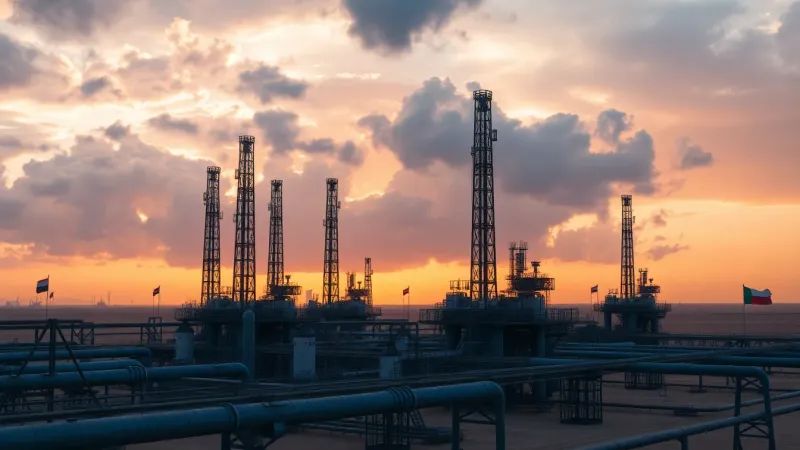
Alexander Novak, Russia's Deputy Prime Minister, says that Moscow will remain in OPEC+ despite the UAE's surprise withdrawal and that a price war is not expected.

American stocks are touching new highs at the end of April. US indices continue their upward surge without interruption.

Six people aged between 17 and 20 are on trial for kidnapping a mother and her son in exchange for a cryptocurrency ransom. A case that shows the real risks associated with digital assets.
Rising energy prices prompt the Bank of Japan to revise its inflation forecasts upwards. A major turning point for Japanese monetary policy and the yen.