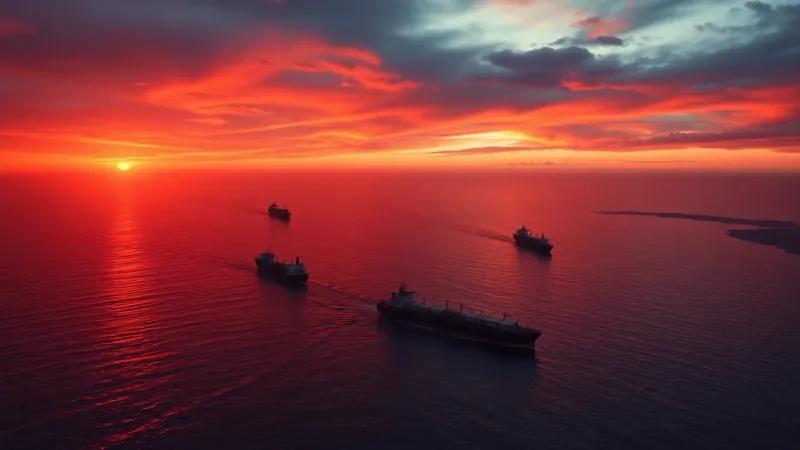
The Strait of Hormuz remains a strategic bottleneck for the global economy. If this waterway remains closed, the United Kingdom could slip into recession. That is the warning issued by forecasters. A prolonged blockade would mean skyrocketing energy prices and the collapse of the already fragile British economy. 🚨
🔍 What’s happening?
The Strait of Hormuz is the only route for a massive portion of the world’s oil. A prolonged closure would send energy prices soaring and destabilize global supply chains.
Forecasters warn that the United Kingdom—a net energy importer already grappling with persistent inflation—would be particularly vulnerable to such a shock. As energy costs skyrocket, household consumption would plummet, leading to a contraction in GDP.
💡 Why does this matter?
For traders, this is a stark reminder: geopolitics never stays out of the markets. A closure of the strait would directly impact currencies (GBP/USD likely to fall), sovereign bonds (the Bank of England would be forced to react), and British stock indices.
For the Bank of England, this is a classic dilemma. Faced with imported energy inflation, raising rates would worsen the recession. Lowering them would fuel inflation. Basically, we’re looking at a stagflationary scenario that nobody wants.
📊 Our Take
We’re taking this scenario very seriously. Geopolitical risks in the Middle East should never be ignored.
Historically, every closure of the Strait has triggered a rapid spike in crude oil prices, and the United Kingdom cannot afford to absorb such a shock. The British economy is already navigating rough waters. If the Strait were to remain closed for weeks, there’s potential for a real recession—not just a statistical one. The Bank of England would be caught between raising rates (bad for growth) and lowering them (bad for imported inflation).
For French traders watching the GBP markets: stay in defensive mode with the British currency. If geopolitical risks escalate, the pound will take a hit. At the same time, Europe would be somewhat spared from this scenario thanks to its energy diversification, but not entirely: the ECB, too, would be disrupted by a rise in energy prices.
✅ Key takeaway
- Closure of the Strait of Hormuz = massive oil shock for the entire world.
- The United Kingdom, a net energy importer, would be the first to be hit by a recession.
- The Bank of England would face an intractable stagflationary dilemma.
- The British pound (GBP/USD) would be the currency most exposed to this risk.
- Forecasters are sounding the alarm: ignoring this scenario would be naive.
What do you think? If tensions in the Middle East escalate tomorrow and the strait is closed, will you short the pound, or would you rather wait and see how the BoE reacts?
🔎 See also
To learn more, check out all our economic analyses on ActuTrading Economy 📈
Source: Investing.com